How to Learn Morse Code
Morse code is easier to learn than most people think — if you learn it the right way. This guide walks you through the proven method used by amateur radio operators: learn by sound, use the Koch method and Farnsworth timing, and practice a little every day.

The biggest mistake beginners make is treating Morse as a visual code — staring at a chart and translating letter by letter in their head. That works for a puzzle, but it caps you at a few words per minute. Fluent operators don't see ·− and think "A"; they hear a rhythm and know it instantly. Everything below is built around that one idea.
The 5-step method
Learn by sound, not sight
From your very first session, listen to characters rather than reading them. Open the translator, type a letter, and press Play. Focus on the "di-dah" rhythm — that pattern is what your brain will lock onto.
Start with just two characters
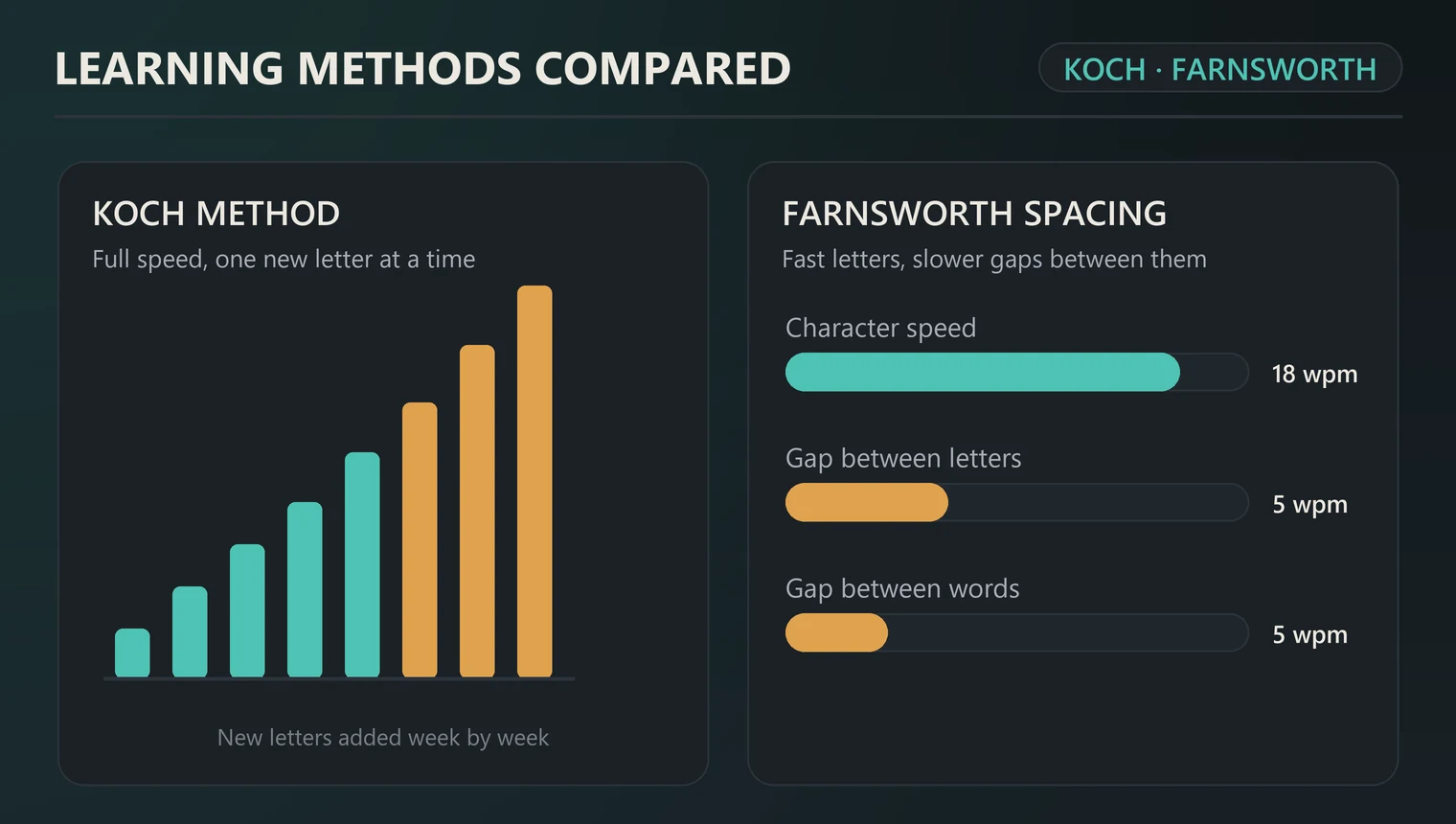
The Koch method starts with two letters sent at full target speed. Practice until you can copy them at ~90% accuracy, then add one more. Slowly building up like this is far faster than learning all 26 at a crawl.
Use Farnsworth timing
Farnsworth keeps each character at full speed but stretches the gaps between them. You learn the correct rhythm from day one, but still get a beat to recognise each letter. Turn it on in the translator's Settings panel.
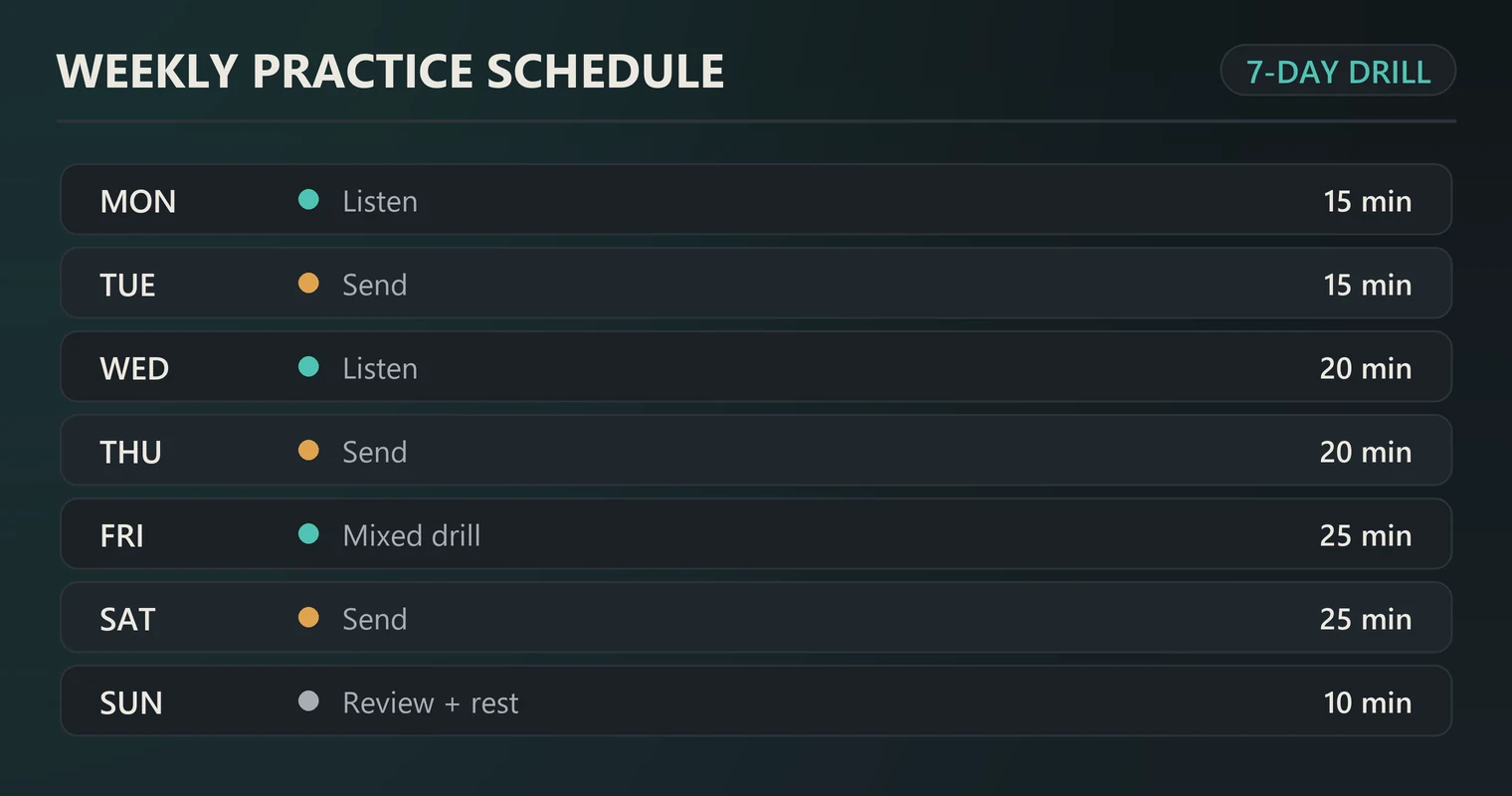
Practice 10–15 minutes daily
Short, frequent sessions beat long, rare ones. Consistency is what moves characters from "I can work it out" to "I just know it." Copy a few words, then send a few.
Send as well as receive
Type your own messages into the translator and play them back, or tap them out. Producing code reinforces recall from the other direction and builds a steady, even rhythm.
The Koch method, explained
Developed by German psychologist Ludwig Koch in the 1930s, the Koch method flips the usual approach: instead of learning slowly and speeding up later (which forces you to relearn every character), you start at your target speed immediately and add characters one at a time. Because you never learn the "slow sound," there's no bad habit to unlearn. It's the fastest route to real proficiency. For the wider story behind the code, see the history of Morse code.
Farnsworth timing vs. character speed
Two different speeds matter in Morse:
- Character speed — how fast the dots and dashes within a letter are sent (keep this high, e.g. 18–20 WPM).
- Effective speed — how fast overall, including the gaps (start this slower, e.g. 8–10 WPM).
Farnsworth timing gives you high character speed with a slower effective speed — the best of both. As you improve, shrink the gaps until the two speeds meet. You can experiment with both in the translator; see how the timing changes on the alphabet chart too.
Common mistakes to avoid
Don't count dots and dashes. Don't learn from a chart alone. Don't start too slow (you'll have to relearn everything). And don't skip sending practice — recognising code and producing it are different skills.
A simple 4-week practice plan
- Week 1: Learn 5–8 high-frequency letters (E, T, A, N, I, M, S, O) by sound.
- Week 2: Add the rest of the alphabet a few letters at a time; copy short random words.
- Week 3: Add numbers 0–9 and start copying full common words and phrases.
- Week 4: Add punctuation, push your effective speed up, and practice sending.
Practice right now
Open the Morse code translator, turn on Farnsworth in Settings, and copy a few words. Kids learning too? Try our Morse code for kids games. Once you're confident, learn the world's most important signal: SOS in Morse code. More tips and stories are on our Morse code blog, and you can read about who we are.
Frequently asked questions
With 10–15 minutes of daily practice using the Koch method, most people can copy the full alphabet in about 3–6 weeks. Reaching a comfortable conversational speed of 15–20 WPM usually takes a few months of steady practice.
Learn the sounds. Memorising dots and dashes visually creates a slow mental translation step that limits your speed. Training your ear on each character's rhythm lets you recognise letters instantly — see the timing on our alphabet chart.
Start with characters sent at 15–20 WPM but use Farnsworth timing to add extra space between them. This teaches the correct rhythm from day one while giving you time to react. Adjust both in the translator's Settings.
No. You can learn entirely with this website — listen with the translator and practice sending by tapping along. A physical straight key or paddle is fun later if you get into amateur radio, but it isn't required to become fluent.
Practice with the free translator
Turn on Farnsworth timing, pick your speed, and start training your ear right now.
Open the translator →