SOS in Morse Code
SOS is the world's most recognised distress signal: three dots, three dashes, three dots, sent as one unbroken sequence. Here's what it means, why it was chosen, and exactly how to send it with sound, light, or taps.
What SOS means
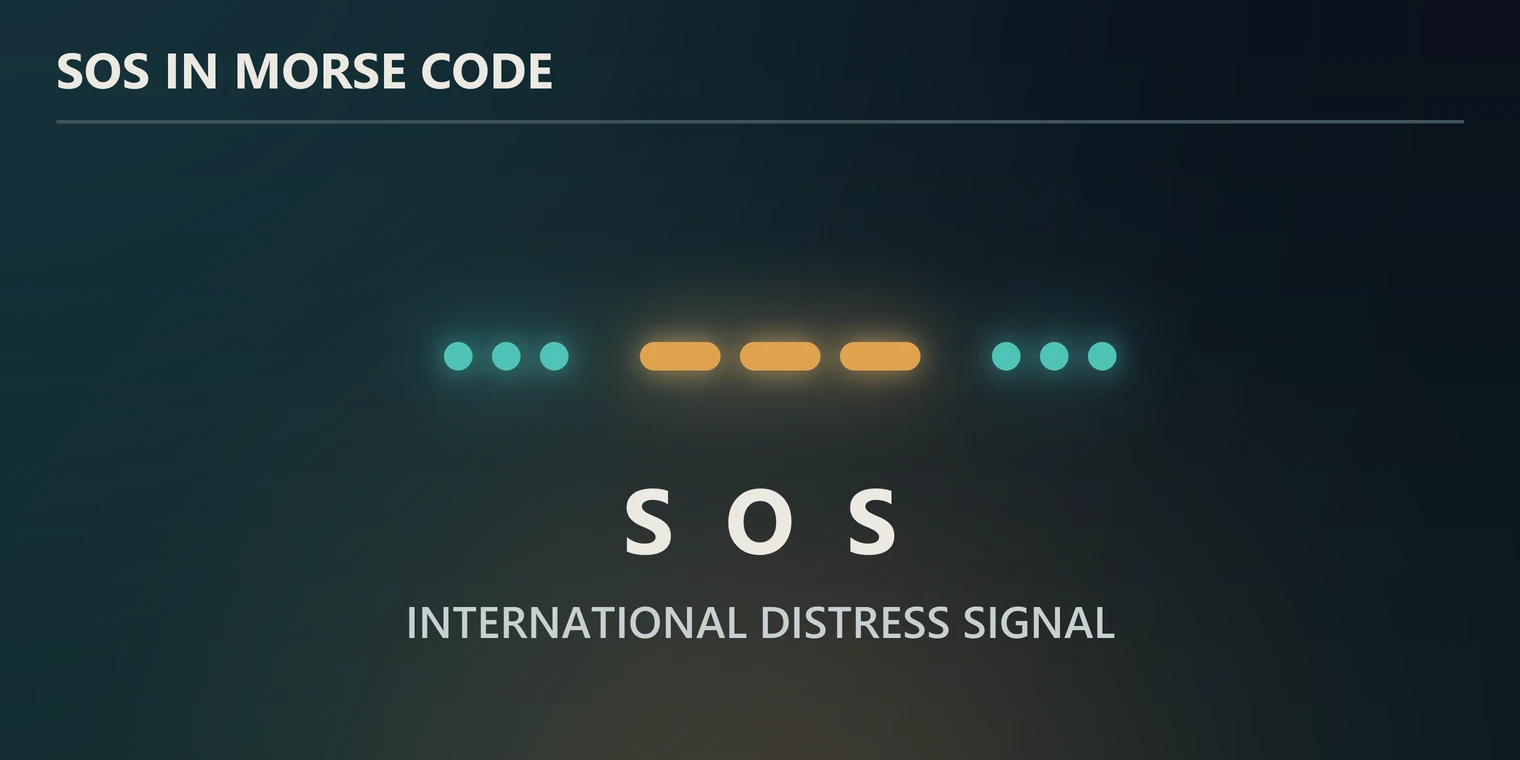
In International Morse code, SOS is written ··· −−− ··· and sent as a single, continuous nine-symbol signal — three short (dots), three long (dashes), three short — with no pauses between the letters. That unbroken run is what makes it stand out from ordinary code and impossible to mistake for anything else.
Want to hear it? Press the SOS button in our Morse code translator to load and play it instantly.
Does SOS stand for anything?
No — and this surprises people. SOS is not an abbreviation for "Save Our Souls," "Save Our Ship," or anything else. Those are backronyms invented afterwards. When it was adopted internationally around 1906–1908, SOS was chosen purely because its rhythm is simple, symmetrical, and unmistakable, even through heavy radio static. The letters S and O just happen to be the plain-language way to describe the pattern ··· −−− ···. You can confirm those letters on the Morse alphabet chart.
A short history
Before SOS, ships used a patchwork of distress calls — the British Marconi company used CQD. Germany introduced ··· −−− ··· in its 1905 regulations, and it became the worldwide standard at the 1906 International Radiotelegraph Convention (effective 1908). Its most famous use came in 1912, when the Titanic's operators sent both CQD and the newer SOS. Learn more about the era in our history of Morse code.
How to send SOS
With sound
Send three short beeps, three long beeps, three short beeps, then pause and repeat. A short (dot) is one time-unit; a long (dash) is three. Any noise-maker works — a whistle, a horn, or banging on metal.
With light
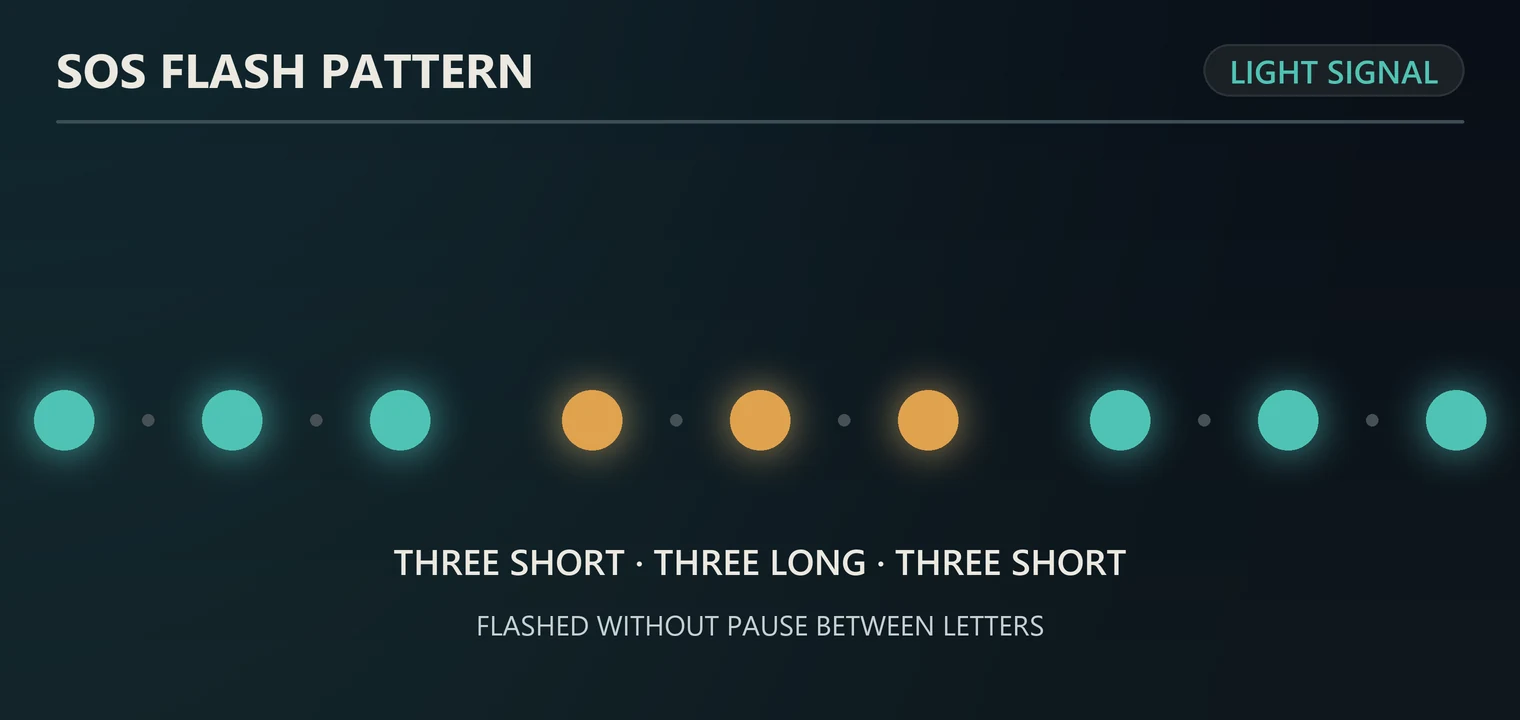
Use a flashlight, phone torch, or mirror: three quick flashes, three slow flashes, three quick flashes, pause, repeat. Roughly one second for short, three for long. Point it toward roads, boats, aircraft, or reflective surfaces.
With taps or touch
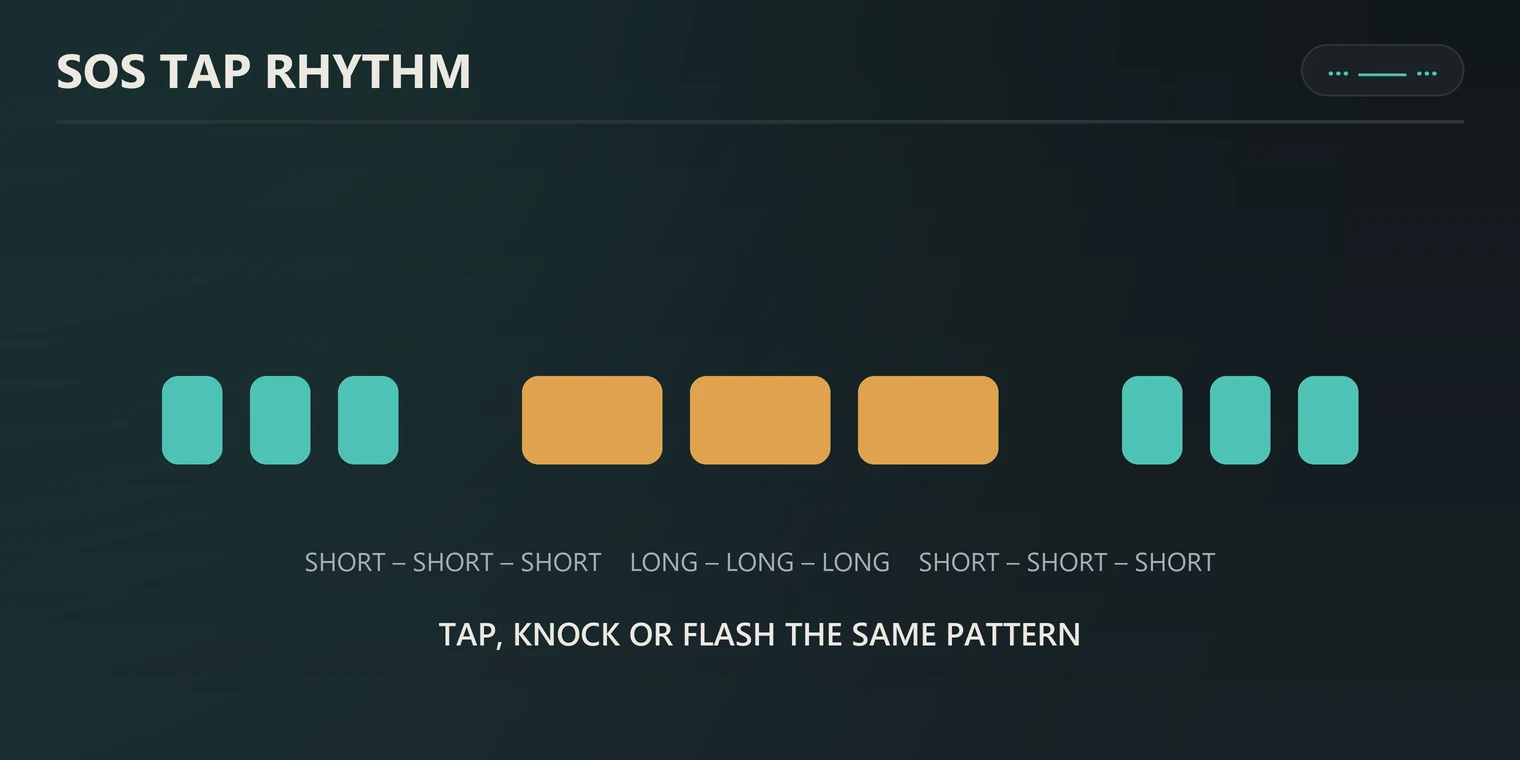
Tap the same rhythm on a pipe, wall, or window — useful when you're trapped or can't make noise safely. Our translator can even vibrate the pattern on a phone so you can feel the timing.
In a real emergency
If you can, call your local emergency number (112, 911, 999) or use a mobile SOS / satellite feature first — they reach responders faster. Use a Morse SOS when you have no other way to signal. This page is educational and not a substitute for professional rescue services.
Other useful distress signals
- MAYDAY — the spoken voice-radio distress call (from French m'aider, "help me").
- PAN-PAN — signals urgency that isn't immediately life-threatening.
- Three of anything — three fires, three whistle blasts, three flashes: the universal "I need help" in the outdoors.
Practice sending SOS
Open the translator, press SOS, and try the light-flash and vibrate options. Then explore more common words and phrases, follow our guide to learning Morse code, or share Morse code for kids with younger learners. You'll find more on our Morse code blog, or learn about MorseTranslateCode.
Frequently asked questions
SOS is three dots, three dashes, three dots (··· −−− ···) sent as one continuous signal with no gaps between the letters — the internationally recognised distress call. Press SOS in our translator to hear it.
No. SOS is not an abbreviation. It was chosen because its ··· −−− ··· pattern is simple and unmistakable. Phrases like "Save Our Souls" were invented later as memory aids.
Flash three short, three long, three short, then pause and repeat. Short is about one second, long about three. Aim toward roads, water, aircraft, or reflective surfaces.
Formal maritime distress moved to digital systems (GMDSS) in 1999, but SOS remains a universally understood emergency signal for light, sound and taps — and is still taught to sailors, pilots, scouts and survivalists.
Play SOS in one tap
Load the ··· ––– ··· signal, flash it as light, or feel it vibrate — all free in the translator.
Open the translator →